
Gelco Chimney Sweep in Parker: A Homeowner’s Guide
Most homeowners search “Gelco chimney sweep Parker CO” expecting a brand name to guarantee a good job. Here’s the honest answer: Gelco makes rotary cleaning equipment and inspection cameras used by professional chimney sweeps, and the brand on the tool tells you almost nothing about the person holding it. A rotary system is only as good as the diagnosis that follows the cleaning. We’ve seen plenty of chimneys “swept” with good equipment and never actually looked at. If you’d rather not sort that out yourself, call (866) 947-9489 and we’ll talk it through.
What Is Gelco Equipment, Actually?
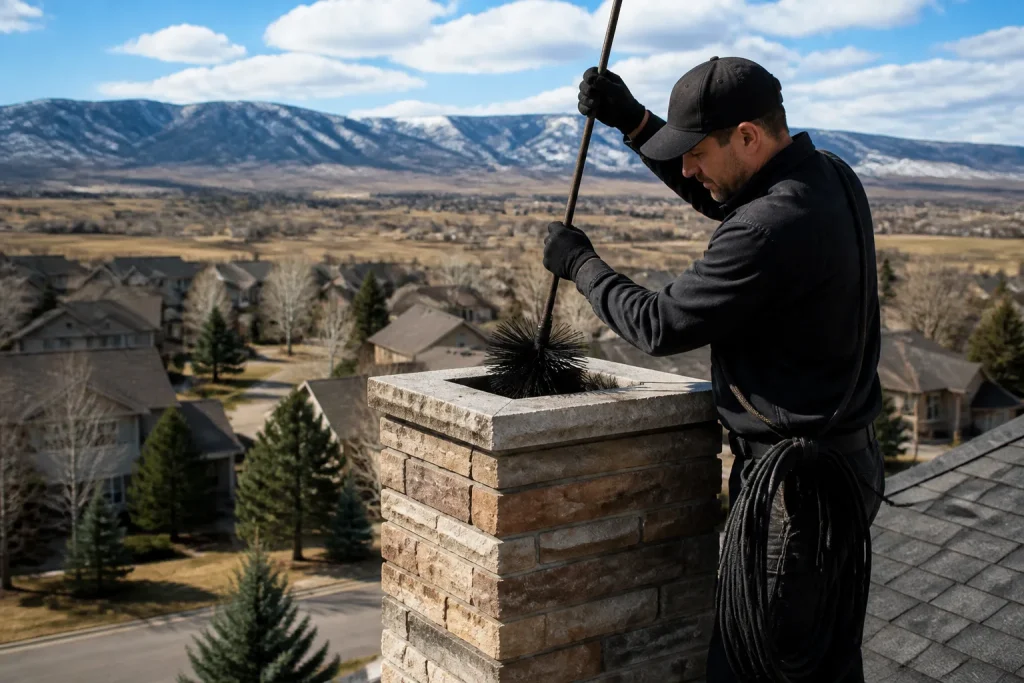
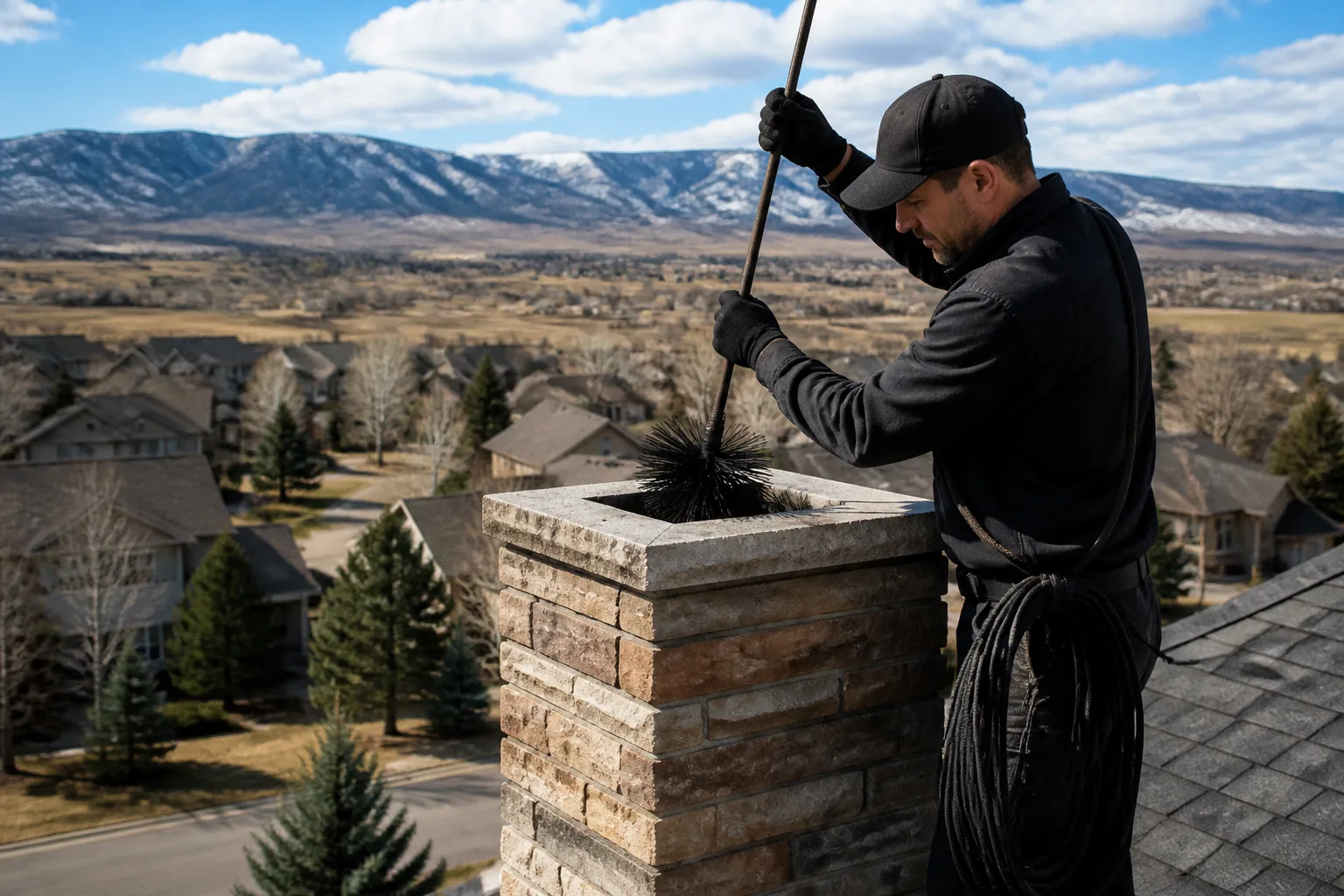
Gelco is a professional-grade line of chimney cleaning tools. When a company says they use Gelco, they usually mean rotary cleaning systems (a powered whip or brush head on a flexible rod) and the inspection cameras that pair with that workflow. It’s trade equipment, not a consumer product you’d find at a hardware store. That matters because rotary systems handle certain buildup better than a hand brush can.
What homeowners often assume is that “Gelco” is a service or a certification. It isn’t. It’s hardware. The quality of your sweep depends on three things that equipment can’t supply on its own:
- Knowing what to look for. A camera pushed up a flue shows you a picture. A trained eye reads that picture: creosote type, liner condition, offset joints, gaps at the damper.
- Knowing when to stop. Rotary heads are powerful. Used carelessly against a fragile clay liner, they do damage. Experience tells a technician when the tool is too aggressive for what’s in there.
- Knowing what it means. Glaze creosote looks different from soot and from a third-degree tar deposit. Each one demands a different response, and none of that is printed on the box.
That gap between owning the tool and understanding the result is where most budget sweeps fall short in Parker. If you’re comparing companies, ask what they do with the camera footage, not just whether they have one. Our own chimney sweep visits are built around that diagnostic step rather than tacked onto it.
Why Professional-Grade Tools Still Need Trained Interpretation
A rotary cleaning system is essentially a motorized brush on a long flexible shaft. It spins, it scrubs, it removes creosote from the flue walls. The camera is the second half of the pairing: it lets the technician see the flue before and after cleaning, and spot problems that a flashlight from the firebox can’t reach. But you can hand that whole kit to someone with no training and get a worse result than a careful hand-brush job.
Here’s why. Heavy glaze creosote, the shiny, hardened, tar-like layer that builds up in chimneys run hot and often, doesn’t come off with a light pass. It has to be broken down methodically, and a technician has to recognize it early, before it gets to that stage, or the cleaning becomes a bigger job than the homeowner expected. Liner offsets, the slight sideways joints where sections of a prefab or clay flue meet, are another spot where rotary tools can catch and chew if the operator isn’t reading the feed resistance.
In our experience, the value of a Gelco-class tool shows up in exactly those two places:
- Heavy glaze creosote that a standard brush skips over or leaves streaked.
- Liner offsets and transitions where the flue changes diameter or direction.
Neither one is a “brand” problem. Both are a training problem. In Parker, where wood burning gets real use through the cold months, we see enough glaze creosote that the difference between a skilled rotary cleaning and a quick brush pass is often visible on camera. A proper sweep should end with a documented look at what came off and what’s still there. That’s the part that tells you whether the chimney is safe to burn.
What Gelco Tools Can and Can’t Do
It’s worth being clear about scope, because no piece of cleaning equipment fixes a structural problem. Gelco rotary systems clean. Gelco inspection cameras document. Neither one repairs a cracked liner, a failed crown, or a rusted damper. If the camera shows a compromised flue, the answer isn’t a better cleaning, it’s a repair plan. That’s the boundary homeowners deserve to understand before they book.
What we see happen: a company arrives with good rotary gear, runs it up the flue, hands over a receipt, and leaves. No camera report. No written findings. The homeowner assumes everything is fine because the equipment looked professional. Six months later there’s a draft problem or a water stain on the ceiling. The tool was never the issue; the missing step was the diagnosis.
So when we’re evaluating a chimney, the equipment is a means to an end. Cleaning addresses creosote. Inspection addresses structure. Repairs address what inspection uncovers. In Parker, we work with professional-grade materials from brands chimney specialists trust, including HeatShield for ceramic resurfacing and Olympia Chimney for liners and caps, but the tool and the material only matter if the technician reads the evidence correctly. That’s the standard to hold any company to. If a sweep can’t tell you what they found and show you why, the brand on their equipment is decoration.
Red Flags: They Own the Tool but Skip the Workflow
You can usually tell within the first fifteen minutes whether a chimney company is running a real diagnostic process or just going through the motions. The equipment is identical. The workflow isn’t. In Parker, we’ve heard enough homeowner accounts to recognize the pattern, so here’s what to watch for:
- No camera before cleaning. If they start scrubbing without first inspecting, they can’t know what they’re dealing with. Skip-ahead is a red flag.
- No written findings. A real inspection produces a record: what was found, what was cleaned, what needs attention. Verbal-only is a warning sign.
- No before-and-after look. A camera records; if they won’t show you the footage, ask why.
- A quote to reline before a single photo. Structural repairs should follow evidence you can see, not a sales pitch.
- Same cleaning every year, same story. If your flue conditions never change and the report never varies, someone isn’t looking.
The through-line is this: good equipment, used without a documented process, is worse than honest basic work, because it lends the appearance of expertise. If you want a company that inspects before it recommends, that’s the standard we hold. A sweep should be able to tell you what’s in your flue, what it removed, and what’s left, in plain language, before you pay. When a report is missing those three things, treat it as an unfinished job, not a clean one.
How Gelco Equipment Fits Into a Documented Diagnostic Process
A proper chimney visit has an order, and the cleaning tool comes second, not first. The camera goes up before the rotary head does, so the technician knows what’s in the flue and how aggressive to be. After cleaning, the camera goes up again to confirm what came off and to look for anything the first pass couldn’t see. Then the findings get written down, in language a homeowner can act on, and that becomes the basis for any recommendation to repair or leave things alone.
In a Parker home, that process looks roughly like this:
- 1
Inspect. Camera survey of the flue, firebox, damper, crown and cap, looking for creosote type, liner condition and water intrusion.
- 2
Clean. Rotary equipment sized to what the inspection showed, aimed at the specific buildup present, not a one-size pass.
- 3
Re-inspect. Confirm the result and catch anything the cleaning revealed or shifted.
- 4
Document. A written summary of what was found, what was done, and what, if anything, needs work next. If a repair can safely wait, we say so.
The four steps are the point. The Gelco-class tools in steps two and three earn their cost specifically when there’s heavy glaze creosote or a liner with offsets to navigate. On a lightly used flue with soot only, a careful hand cleaning can do the job. Equipment should scale to the chimney in front of it, not the other way around. That’s how we run every sweep in Parker, and it’s why a fireplace repair recommendation should never arrive before the camera evidence that justifies it. When we recommend something, we can show you the photo first.
Frequently Asked Questions
No. Gelco is a manufacturer of cleaning and inspection equipment, not a certification body. A company using Gelco tools isn’t automatically trained, licensed or insured by that fact alone. Ask about licensing and insurance separately, and ask what inspection process the company follows. The local pro we connect you with is licensed and insured as Colorado requires.
You can’t. The same rotary system and camera are sold to careful, methodical technicians and to companies that run them without a diagnostic workflow. What separates them is what happens before and after the cleaning: a camera inspection, a written report, and a willingness to show you the findings. Ask for those three things before you book.
Glaze creosote is the hardened, shiny layer that forms in chimneys used hard and often, and it’s the type that carries real fire risk because it’s difficult to remove and can reignite. A rotary system with a properly sized head handles it better than a standard brush, but only if the technician recognizes it and chooses the right approach. If your sweep doesn’t mention what kind of creosote they found, ask. We can tell you what’s in your flue from camera evidence you can see yourself.
Most actively used fireplaces need a sweep and inspection once a year, or sooner if you burn heavily or notice draft problems, smoke backing up, or a strong creosote smell. In Parker, where the heating season is long enough to put real hours on a fireplace, annual is the baseline, not a maximum. Call (866) 947-9489 for a free estimate if you’re due.
The Bottom Line
Gelco equipment is a solid professional benchmark, but the tool says less about your sweep than the diagnosis that follows it. A company with the right gear and a documented workflow will inspect before cleaning, show you what the camera found, and tell you plainly when work can wait. A company with the same gear and no process will clean, hand you a receipt, and leave the real questions unanswered. Ask for the report. Ask for the footage. If you’re in Parker and need help, Parker Chimney Sweep Pros offers free estimates – call (866) 947-9489. We answer 24/7, and dispatch runs 7am to 7pm, Sunday through Friday.
Written by the team at Parker Chimney Sweep Pros.
Need Chimney Cleaning Help?
Call Parker Chimney Sweep Pros - the local pro we connect you with is licensed and insured, with free written estimates in Parker.
(866) 947-9489