
How to Choose the Right Chimney Cleaning Company in Parker
The right chimney cleaning company in Parker is the one whose technicians can explain what they found in structural terms and hand you documentation you could show a home inspector. Most homeowners book on star count alone, then end up with a brush-and-a-receipt visit that tells them nothing about the condition of their flue. CSIA certification is the minimum floor, not the differentiator. The real test is whether a company can tell you the difference between a hairline crown crack and a failed crown, and what each one costs to leave alone for another season. If you’d rather skip the interview and get a straight answer from a specialist, call (866) 947-9489.
Why “full service” on a website often means one brush and a camera
In our experience around Parker, the phrase “full service” gets used loosely. What it frequently describes is a single technician with a brush kit and a handheld camera who runs the flue, shoots a few photos, and hands you a cleaning receipt. That’s a sweep, and sweeps matter. But a true diagnostic visit is a different animal, because it’s built to answer questions, not just remove soot.
A genuine diagnostic approach looks like this:
- The technician inspects the firebox, damper, smoke chamber, flue, crown, and cap as one system, not as separate favors.
- Findings get explained in plain terms: what’s normal wear, what’s a future problem, and what needs attention now.
- You receive written documentation with photos, not a verbal summary at the door.
- Recommendations are tied to evidence you can see for yourself.
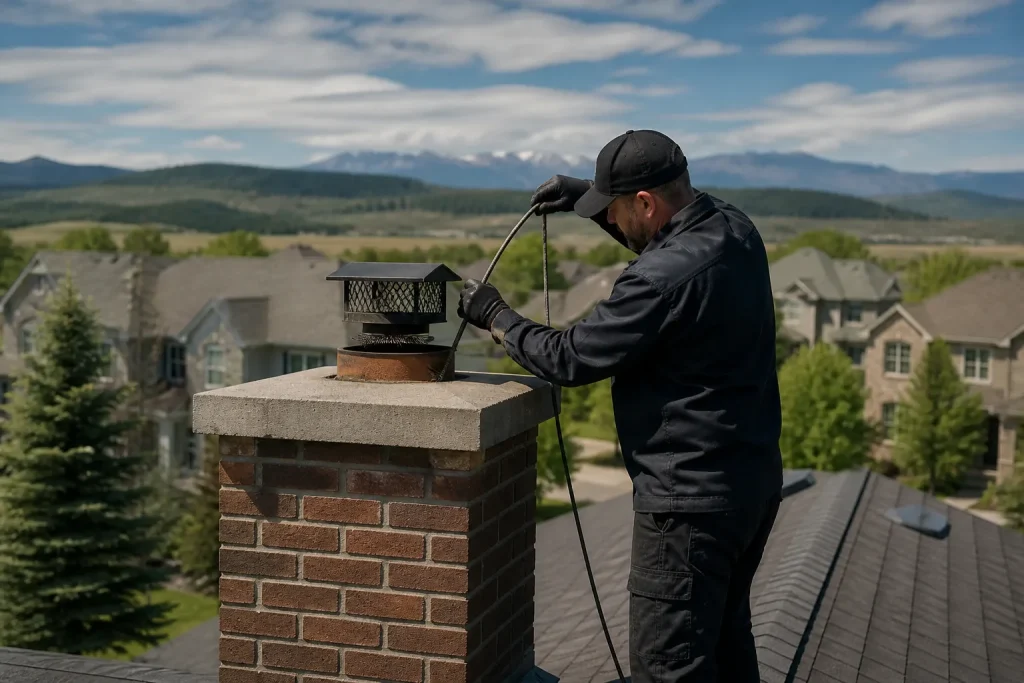
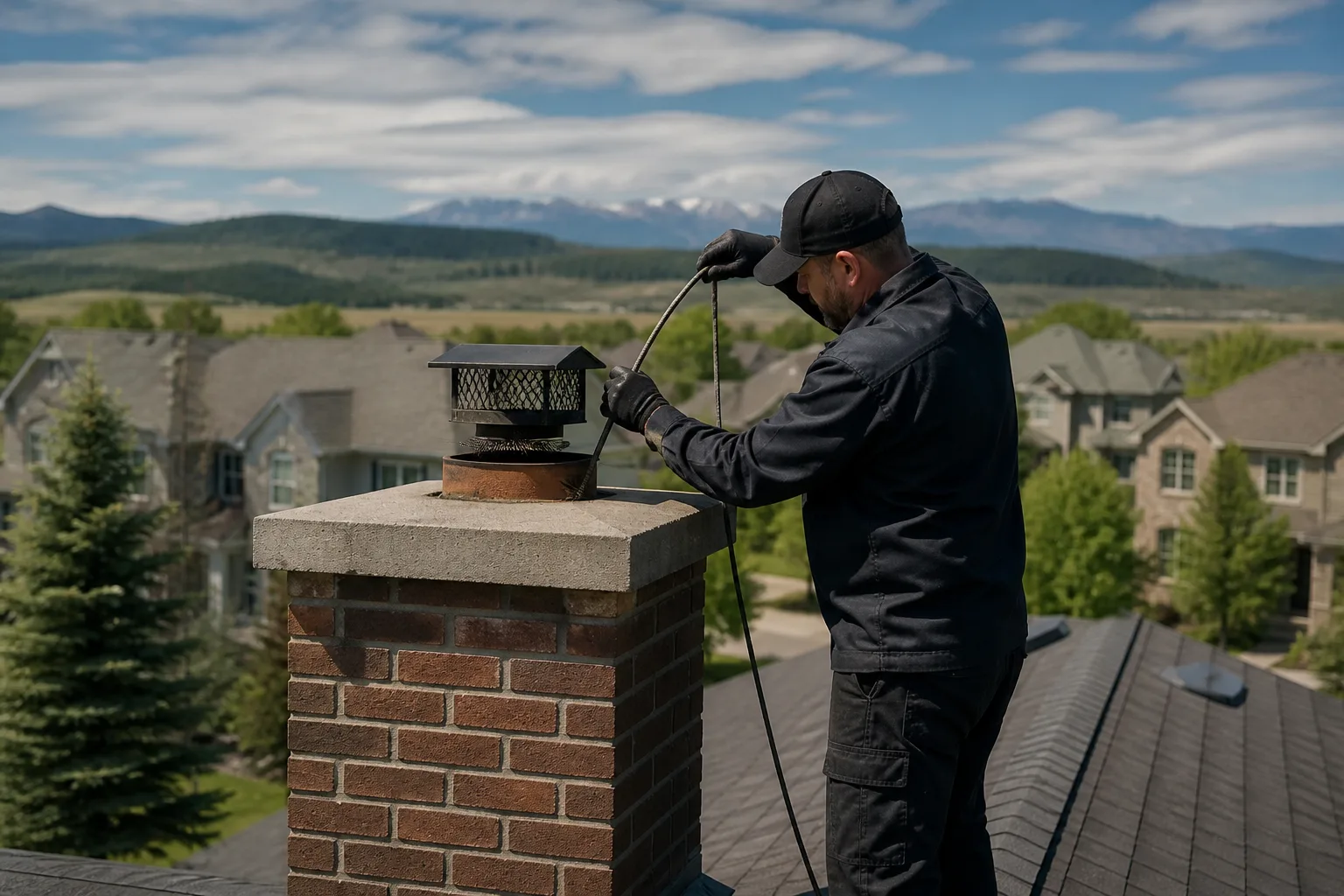
That distinction matters more in Parker than in a lot of places. Homes here sit through freeze-thaw cycles that work on masonry and crowns season after season, and a technician who only looks up the flue from the firebox will miss exterior crown and cap condition entirely. The crown is where water gets in, and water is what quietly ruins chimneys. A company that inspects the whole system from the roof down is doing the job the way it needs to be done.
The five questions to ask before you book a chimney company in Parker
Ask these before you put anything on the calendar. The answers tell you more than any review score, and a good company will welcome them.
- What level of inspection comes with the cleaning? A good answer mentions a Level 1 inspection as standard with every sweep, explains what it covers, and can describe when a Level 2 is warranted. A vague answer is “we look at everything.”
- What documentation do I get? A good answer: a written report with photos you keep. A vague answer: “we’ll let you know if anything’s wrong.”
- What trade credentials do your technicians hold? A good answer names CSIA certification and can speak to manufacturer training on the products they install. A vague answer: “we’re fully licensed and insured,” with no specifics.
- What happens if you find a problem? A good answer separates urgent safety issues from maintenance items and tells you plainly when work can wait. A vague answer that jumps straight to a big repair number is the upsell pattern.
- Who actually shows up, and what do they carry? A good answer describes a trained chimney technician with proper tools and inspection equipment. A vague answer that sounds like a general handyman with a ladder is worth a second thought.
Run those five questions past any company in Parker and the field narrows fast. The ones who answer with specifics are the ones who do the work.
A cleaning receipt is not a Level 1 inspection report
This is the single most overlooked distinction in chimney service, and it’s the one that costs homeowners at resale. A cleaning receipt says soot was removed on a date. A Level 1 inspection report says what condition the system is in, what was checked, and what the technician observed. Only one of those protects you when a buyer’s inspector starts asking questions.
A proper Level 1 inspection covers the readily accessible parts of the system: the firebox, damper, smoke chamber, flue, and the visible portions of the crown and cap. It’s not invasive, and it doesn’t require special equipment beyond what a trained technician carries. What separates a real report from a receipt is the writing and the photos.
- A receipt proves a service happened.
- An inspection report documents the condition of the system at a point in time.
- At resale, the report is what shows a buyer the chimney has been maintained, not just swept.
When we inspect before we recommend, the report is the product. It’s also the thing that keeps a homeowner from being talked into work they can’t verify. If a company can’t tell you what a Level 1 inspection includes, that’s your answer about how the visit will go.
How to verify credentials beyond CSIA
CSIA certification is the recognized baseline for chimney sweeps, and you should confirm it. But it’s a floor, and the companies that do structural work well carry more than the floor. Here’s what to look for in Parker and how to check it without making it awkward.
Ask about specific manufacturer training and authorization on the products they install. A company that installs flexible stainless liners should be fluent in the systems it uses, whether that’s DuraFlex or another professional line. A company that does liner restoration should be able to explain the ceramic resurfacing method and when it’s appropriate versus a full reline. HeatShield, for instance, is a non-demolition restoration system, and a technician who works with it should be able to describe exactly which conditions it fixes and which it doesn’t. If the answer is fuzzy, the capability probably isn’t there.
On insurance, ask for the specifics: general liability and workers’ compensation, and whether the certificate can be sent before the visit. A serious operation answers that without hesitation. Finally, ask what brands they work with and why. When a company names professional-grade chimney lines like Gelco, Copperfield, DuraFlex, or Olympia Chimney and can explain the reasoning, you’re talking to specialists. When the answer is “whatever the supply house has,” you’re talking to a generalist.
Our technicians have up to 14 years of experience, and that experience shows up in exactly these conversations.
Why a generalist handyman is a risky choice for chimney work in Parker
Chimney work looks like it belongs on a handyman’s list. It’s masonry, it’s a ladder, it’s a brush. The problem is that a chimney is an engineered system where fire, water, and freeze-thaw all act on the same structure, and the failure modes are specific. A generalist can clean a flue. What a generalist often can’t do is read what the flue is telling them.
Parker’s housing stock makes that gap more consequential. Many homes here were built with masonry chimneys and factory-built fireplaces that are now old enough for crown cracks, spalling brick, and deteriorated mortar joints to show up. The crown is the concrete cap at the top of the chimney, and when it cracks, water gets in. Water freezes, expands, and works the masonry apart from the inside. A handyman who patches a visible crack without addressing why it cracked is buying you a season, not a fix.
A chimney specialist, by contrast, inspects the crown, cap, flashing, and flue as one system and knows which repairs are structural and which are cosmetic. That’s the difference between a patch and a repair. It’s also the reason we treat cap and crown work as prevention, not cleanup.
When to call a pro
Some chimney issues can wait for a scheduled visit. Others can’t. Call a professional promptly if you notice any of the following:
- Smoke rolling back into the room when the fireplace is in use.
- A strong creosote or burning smell that lingers after the fire is out.
- Visible cracks in the firebox, smoke chamber, or exterior masonry.
- Water staining on the ceiling near the chimney or rust on the damper.
- Any suspicion that the liner is damaged, since a compromised liner is a carbon monoxide risk.
Those are reasons to pick up the phone, not reasons to climb on the roof. Chimney work involves heights, fire, and in some cases gas appliances, and it’s a job for a trained professional. We’d rather you call and ask than guess.
Related services in Parker: a routine chimney sweep, fireplace repair when the firebox or damper needs attention, and chimney repair for masonry, crown, and liner work. From annual sweep to full liner restoration, it’s one specialist for the whole system.
The Bottom Line
Choosing a chimney company in Parker comes down to documentation and specificity, not review counts. Ask the five questions. Confirm CSIA certification and then go a layer deeper into manufacturer training and insurance. Insist on a written Level 1 inspection report with photos, not a receipt. And favor the company that can explain the difference between a hairline crown crack and a failed crown, because that company is inspecting your chimney rather than just sweeping it.
We inspect before we recommend, and nothing gets suggested without evidence you can see for yourself. If you’re in Parker and need help, Parker Chimney Sweep Pros offers free estimates. Call (866) 947-9489. We answer 24/7, with fast dispatch from 7am to 7pm, Sunday through Friday.
Frequently Asked Questions
A standard chimney sweep in Parker is typically a modest flat fee, and the exact price is set per job by the written estimate before any work begins. The estimate is free, and it should cover both the cleaning and the Level 1 inspection. Call (866) 947-9489 for an exact quote.
Yes, an annual Level 1 inspection is the standard recommendation for a chimney in active use, and it’s the report that documents condition over time. A cleaning alone doesn’t give you that record. If you’ve just bought a home with a fireplace of unknown history, schedule the inspection before your first fire. Call (866) 947-9489 to book one.
Most chimneys in regular use should be swept once a year, and more often if you burn frequently or notice heavy creosote buildup. The inspection tells you what your specific chimney needs rather than a generic schedule. Call (866) 947-9489 and we’ll help you figure out the right interval.
Skipping service lets creosote accumulate and lets small problems like a crown crack or a deteriorating liner go unnoticed until they’re expensive or unsafe. Creosote is flammable, and a damaged liner can let combustion gases into the home. Neither is worth the risk. Call (866) 947-9489 for a free estimate and get a clear picture of where your chimney stands.
Written by the team at Parker Chimney Sweep Pros.
Need Chimney Cleaning Help?
Call Parker Chimney Sweep Pros - the local pro we connect you with is licensed and insured, with free written estimates in Parker.
(866) 947-9489